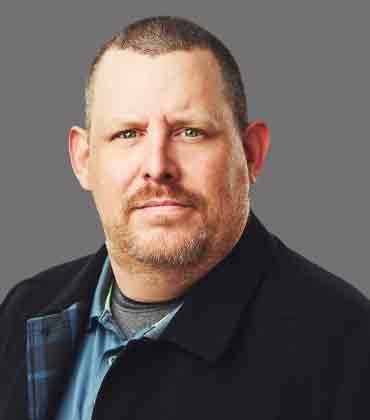
A Certified Safety Professional (CSP), John Myles Byrd brings more than 20 years of experience in safety strategy and culture development. He leads safety initiatives for complex, high-risk construction projects, including semiconductor facilities and hyperscale data centers. His expertise spans risk management, serious injury and fatality prevention, contractor coordination and data-driven safety improvement.
Making Safety Part of Every Decision
Over the past two decades, the construction industry has moved from an authoritarian, compliance-driven approach toward behavioral safety and, more recently, psychological safety. Workers are now encouraged to speak up, recognize hazards and participate in decisions that affect their well-being.
For John Myles Byrd, this evolution points to a deeper question: how prepared are the people leading work on the ground to make safety part of every decision?
Byrd believes the answer lies in looking beyond procedures and asking what organizations are doing to develop the people responsible for putting them into practice. Construction sites are not controlled environments populated by machines that perform predictably. They are workplaces where people make decisions under changing conditions, coordinate complex tasks and sometimes make mistakes. Safety programs must account for that reality.
For Byrd, it is the distinction between managing safety and building the leadership capacity to sustain it. The objective is not simply to prevent every deviation through tighter controls, but to create working conditions in which potential failures are identified early, decisions are made with the right expertise and mistakes do not become serious injuries. He also emphasizes the use of hold points at critical stages of work, which ensure crews have the necessary guidance and expertise before proceeding.
Preparing Leaders for the Work Ahead
The urgency of Byrd’s approach becomes clearer as construction projects grow in scale and technical complexity. The expansion of AI data centers and semiconductor manufacturing facilities has intensified demand for skilled construction labor. Large projects must assemble substantial workforces, often elevating experienced tradespeople into foreman and lead positions as teams take shape.
Technical experience, however, does not automatically translate into leadership readiness. Byrd recognizes that a capable tradesperson may understand a task thoroughly but still need guidance on conducting effective meetings, engaging a crew, recognizing changing conditions and encouraging workers to raise concerns.
Byrd sees this transition as a critical point in the safety process. “When frontline leaders are not adequately prepared, organizations end up placing them in positions of responsibility without giving them the tools to exercise it effectively,” he says.
At Hoffman Construction Company, this approach has led to the development of Competency Observation and Readiness Evaluation (CORE) facilities on project sites. These provide hands-on learning environments involving high-risk activities such as confined-space entry, working at heights and lockout/tagout. The facilities allow leaders to work through scenarios with instructors and peers. They can discuss expectations, examine risks and develop a shared understanding of the project’s risk tolerance before stepping into the field.
The emphasis extends beyond technical execution. Leaders must also learn how to facilitate conversations, encourage participation and help crews take ownership of safety. The aim is to identify learning needs and strengthen capabilities, not discourage people from acknowledging what they do not know.
Byrd believes that addressing the lack of knowledge with encouragement matters in an industry facing generational gaps in its workforce. Experienced tradespeople possess knowledge accumulated over decades, while new entrants need opportunities to learn from that experience.
The more important question is whether construction safety professionals understand the work well enough to influence it meaningfully.
His opinion is that organizations should create environments where both groups can exchange knowledge openly. Stories about an operation that went wrong can reveal the consequences of a missed control or a poor decision. Yet lessons from successful operations are equally valuable. Understanding what went right—and how those conditions can be reproduced—helps organizations build a more complete picture of effective work.
Hoffman’s culture of shared learning and continuous improvement is a reflection of its organizational values, which highly place people, safety, integrity, performance, sustainability, community and diversity. Since its establishment in 1922, Hoffman has become one of the largest general contractors in the U.S. Its professionals have delivered complex projects across advanced manufacturing, aviation, healthcare, education and transportation, fostered in an environment where people can learn, contribute and perform at their best.
Placing Leadership Where Risk Lives
Developing individual leaders is only part of the challenge. Organizations must also consider how leadership is distributed across a project.
Byrd draws a parallel with decentralized command, a principle used in military organizations to distribute decision-making authority rather than concentrating it in too few hands. On a construction site, this means examining the structure of frontline supervision: the size of each working crew, the responsibilities of its foreman and the number of crews overseen by non-working supervisors.
Appropriate leadership at each level allows decisions to be made closer to the work while remaining aligned with the company’s values and risk tolerance. It also makes safety less dependent on messages delivered by senior executives and more dependent on the everyday behavior of those directing crews. As Byrd observes, the only way to do that is through decentralized command.
He strongly believes that when leaders consistently demonstrate the company’s values at each level, they influence the people around them. The result is a workplace where asking questions, identifying concerns and pursuing continuous improvement become shared responsibilities.
Knowing Which Risks Matter Most
A leadership-led approach also requires clarity about where attention should be concentrated. Byrd cautions against treating every hazard as though it carries the same potential consequences.
Housekeeping, appropriate personal protective equipment and trip hazards are essential elements of a sound safety program. But an extension cord on the ground and an inadequately protected fall hazard do not present the same potential severity. When every observation receives equal emphasis, the conditions most likely to cause a serious injury or fatality can lose their prominence.
Byrd, in response, advocates prioritizing high-risk activities, including work at heights, control of hazardous energy, heavy equipment operations and confined-space work. These tasks demand careful planning, appropriate safeguards and competent supervision because failures can have severe consequences.
The approach, he notes, depends on leaders who understand both the hazards and the work itself. Evaluations and training should help them recognize critical exposures, ask questions and understand why particular controls matter.
Data, he believes, can reinforce this process. Construction organizations collect information through safety observations, electronic pre-task plans and other operational records.
Yet Byrd identifies that having extensive data does not necessarily mean knowing how to act on it. The challenge is to analyze these indicators, identify patterns and use the findings to address emerging problems before an incident occurs.
He also recognizes that changes in personnel, deviations from plans and recurring risk conditions can all signal where additional attention is needed. Properly interpreted by data specialists and software, these signals allow leaders to intervene before an incident review becomes necessary.
Building Safety into Construction Operations
Looking ahead, Byrd sees the need for capabilities expected of safety professionals evolving alongside the projects they support. Knowledge of OSHA requirements and NFPA standards is important, but he points out that technical familiarity with regulations alone does not prepare someone to understand every hazard on a complex construction site.
His idea is that safety professionals must also understand construction means and methods. They should be able to interpret drawings, follow engineered steel erection plans, understand crane lift plans and recognize how sequencing and critical-path decisions affect exposure to risk.
Knowledge, according to Byrd, changes the nature of their contribution. A safety professional who understands what a crew is building, how an operation is sequenced and what work is approaching can identify hazards that might otherwise remain unnoticed.
For him, simply increasing the number of safety personnel on a project does not guarantee better outcomes. “The more important question is whether those professionals understand the work well enough to influence it meaningfully,” says Byrd. A closer integration between safety, engineering, scheduling and construction operations can better inform decisions before crews encounter field hazards.
Ultimately, Byrd’s perspective returns to the people who make construction possible. His emphasis on developing frontline leaders, learning from operational data and preparing teams for high-consequence activities makes him a deserving choice for EHS Leader of the Year in Texas 2026.
Byrd’s leadership is driven by the idea that safer projects begin with better-prepared people. Improving how work gets done so that the people doing it can return home safely is his way of transforming safety from an administrative obligation into an operational capability.