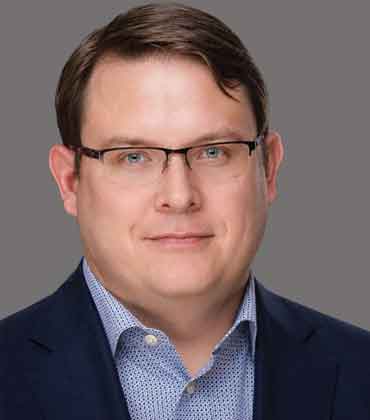
Matthew Ferris comes to municipal leadership with experience spanning planning, development and broader administration. A designated planner, licensed right-of-way agent and environmental professional, he brings a systems-based approach to municipal administration, informed by experience across different areas and levels of local government.
Building the Foundation for Sustainable Growth
Ferris views municipal government as an interconnected system, where decisions made in one area can create obligations and consequences across the organization for decades. His perspective grew from a fundamental lesson in planning. Most municipal decisions are 30-year decisions made in a couple of hours, requiring him to look beyond the immediate issue and consider its broader impact on infrastructure, finances, organizational capacity and the community. A subdivision that requires extending water lines or a decision to designate industrial land can create obligations that remain long after the people who approved them have moved on.
Ferris’s experience took him from planning into a director role overseeing planning, enforcement, assessment, taxation, airports and real property. The broader portfolio deepened his understanding of how municipal functions intersect. Before taking on his current role, Ferris had also served other organizations in chief administrative officer capacities, further developing his experience in municipal administration. He now applies that perspective in Woodlands County, weighing the assessment base, organizational capacity and funding before moving a decision forward.
This approach shapes Ferris’s definition of a sustainable rural community. For him, it is one where infrastructure obligations match capacity and services are delivered at a level residents are willing to pay for. Decisions must be documented robustly for the public and future councils to understand why they were made. He believes community vibrancy can only take root once this stability is in place. Much of the work underway at Woodlands focuses on building this through policy development and organizational structure, creating the foundation for communities to thrive over the long term.
Closing the Gap Between Planning and Delivery
When Ferris arrived at Woodlands County in January 2025, the previous capital project completion stood at about 34 percent. By the end of the year, it had reached about 89 percent, with 100 percent compliance on carryover capital projects from 2023 and 2024. The turnaround did not come from changing the workforce. Staff were capable, and the projects were funded. The issue was structural: a gap between the strategic plan on the shelf and the work employees were expected to carry out each day.
Sustainable rural community. For him, it is one where infrastructure obligations match capacity and services are delivered at a level residents are willing to pay for.
Woodlands County’s strategic plan revealed a similar gap. Ferris arrived in its fifth year with fewer than 10 percent of its tactical items addressed. The plan existed, but lacked a clear connection to employees’ day-to-day responsibilities. Within his first year in charge, more than 25 percent of the items had been completed. Ferris attributes the shift to business planning rather than effort. Each priority is now tied to an annual work plan and a named position, making progress visible and stalled items easier to address while there is still time to act. The discipline extends to investment readiness, with the County completing studies so that when a site selector asks what Woodlands can support, the answer is already documented rather than assembled on request.
Ferris closed the gaps by breaking strategy into clear initiatives and assigning ownership to specific individuals. Connecting employees’ responsibilities to the County’s broader goals gave staff a clear line of sight between their work and the strategy, while making initiatives actionable and creating accountability. He points out that high performance in a municipality is usually a design issue, not a motivation problem. The systems around people either help them succeed or they do not.
Planning for Decisions That Last Decades
Ferris’s approach to municipal leadership also draws on the different professional lenses he has developed throughout his career. He is currently pursuing certifications in economic development and change management, adding further perspectives to his planning, right-of-way and environmental expertise. Each discipline asks a different question of the same problem. For a chief administrative officer, the value lies not in knowing more than any one specialist, but in understanding which questions each specialist may not be asking.
Ferris considers planning a systems-theory profession and a generalist discipline that trains professionals to think across interconnected systems. A single planning decision, such as whether a development should proceed, requires an understanding of transportation, servicing, stormwater, emergency management, levy recovery, statutory planning, legislation, appeal risks and political considerations to name a few. The planner must weigh these factors together because a decision in one area can have consequences elsewhere.
Ferris brought this approach to the development of 16 intermunicipal collaboration frameworks in Alberta, the highest required of any municipality in the province, completing all of them ahead of legislative deadlines. These frameworks now provide insight into Woodlands County’s ongoing renegotiations with its municipal neighbors.
Ferris carries a simple lesson into these discussions. An agreement that ignores a disagreement can create problems for whoever has to administer it later. He focuses on resolving the underlying issue before formalizing an agreement. He also documents the responsibilities and rationale clearly enough for a future chief administrative officer to understand and administer it without having been part of the original negotiations.
Building Trust Through Accountability
For Ferris, accountability takes on a different meaning in a rural municipality, where there is no distance between a decision and the people it affects. He recalls standing at a hockey rink, running the scoreboard while the person next to him complained about a road in the county he managed. That proximity can be uncomfortable, but Ferris believes it keeps the work honest.
Ferris sees public trust as something built through consistency instead of communication campaigns. Municipal leaders must say what they are going to do, follow through and report back in the same terms. Ideally when something goes wrong, he believes it should be acknowledged before anyone asks. A resident living on a street where every sidewalk block is cracked may carry a specific frustration, but that frustration can ease when the resident can see the repair schedule for the street and know the work is planned.
At Woodlands County, the public works team regularly receives positive feedback from residents, which Ferris sees as evidence that people recognize the work being done. He believes keeping communication simple, owning mistakes, following through on commitments and remaining accountable can lower the temperature around difficult municipal issues and help maintain a more civil environment. These are clear solution focused results that build community.
A Simple Rule for Municipal Leaders
Ferris advises anyone leading a rural municipality to “write it down.” Knowledge living in one person’s head is among the largest risks any organization carries. He also emphasizes the need to connect strategic priorities directly to day-to-day work. A strategic plan without annual work plans is essentially useless. His test is simple—identify a priority and ask which employee’s work plan includes it. If no one can answer, the priority is being overlooked. Linking individual responsibilities to strategic priorities strengthens accountability and ownership. Incorporating those connections into onboarding helps employees understand their role in broader organizational goals. Ferris also advises revisiting historical solutions that may not have worked at the time but could be an ideal fit at present.
For aspiring municipal leaders, Ferris encourages experience across organizations and jurisdictions. Recognizing that the average chief administrative officer tenure in Alberta is about two years, he emphasizes building for successors. Systems must be documented and structured so future administrators can understand the reasoning behind them and carry the work forward. This cohesive team building creates stronger communities, partnerships and interconnection, which is what all municipalities strive for.