

Thank you for Subscribing to Gov Business Review Weekly Brief

Michael Kirkopoulos
Chief Administrative Officer, Town of Lincoln
Stewarding the Future of Municipal Leadership
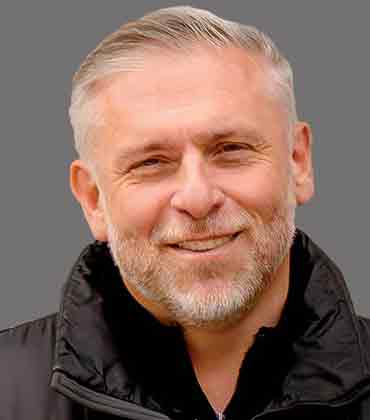
Michael Kirkopoulos is a seasoned municipal executive with extensive experience in strategic leadership, government relations, communications, economic development and complex project delivery. As Chief Administrative Officer of the Town of Lincoln, he has led a growing municipality through significant change and investment, advancing infrastructure and economic priorities while protecting community character, strengthening partnerships and maintaining a strong focus on accountability, service and public trust.
A new park gives children a place to play. A childcare facility supports families. A housing project gives someone a place to call home. A project approval creates an opportunity for a business owner. For Michael Kirkopoulos, Chief Administrative Officer (CAO) at the Town of Lincoln, these are reminders that decisions in municipal government have a direct impact on people’s lives, and that immediacy is what makes municipal government so tangible to Kirkopoulos. “The proximity to the people we serve is what makes local government different and impactful,” says Kirkopoulos. This belief was shaped by years of working in municipal government. Prior to joining Lincoln, Michael spent nearly two decades with the City of Hamilton, gaining broad experience across communications, government relations, major projects and economic development. Working within a large and complex municipal organization provided a strong foundation in strategic decision-making, stakeholder engagement and navigating competing priorities. That experience shaped his leadership approach; one that believes effective municipal leadership requires sound judgment, financial discipline, collaboration and the ability to bring people together around a clear direction. He carried those lessons to Lincoln when he became CAO in 2015. Since then, the town has seen significant growth and change across infrastructure, economic development, tourism, community facilities and government partnerships. For Kirkopoulos, the challenge has been not simply managing that change, but ensuring Lincoln can grow without losing what makes the community distinctive. Preserving Community and Growth Lincoln’s growth brings competing needs. The town is home to agricultural lands, wineries, small hamlets, rural and urban areas and more than one downtown, all held together by a strong sense of community. At the same time, people need housing, businesses need places to invest and the town needs roads, water, wastewater, recreation and community infrastructure to support a growing population. Kirkopoulos does not see growth and preserving Lincoln’s character as an either-or choice. He believes good planning should allow the community to grow while protecting what is important. Under his leadership, the town has invested in its downtowns, protected and promoted agriculture and tourism, built infrastructure before or alongside growth, explored different forms of housing and invested in parks, recreation and public spaces. The acquisition of the former Beamsville District Secondary School property illustrates that long-term outlook. Kirkopoulos and his team recognized an opportunity to acquire a significant community asset and preserve it while considering its future. For him, leadership sometimes means recognizing an opportunity early and preserving it long enough for the right answer to emerge. Partnerships Built on Continuity Supporting a growing community requires significant investment, yet Lincoln, with a population of approximately 30,000, operates with considerably less financial capacity and organizational scale than larger municipalities. In many respects, leading change in a smaller municipality can be more demanding, requiring leaders to achieve ambitious outcomes with fewer resources and less specialized capacity. Kirkopoulos and his team recognized that strong partnerships therefore could not simply be activated when the Town needed funding or support. They made a deliberate investment in building sustained relationships with the Niagara Region, the Province, the federal government, neighbouring municipalities, businesses and community organizations, creating the partnerships and leverage needed to move priorities forward.The proximity to the people we serve is what makes local government different and impactful.
