

Thank you for Subscribing to Gov Business Review Weekly Brief
Gov Business Review: Specials Magazine
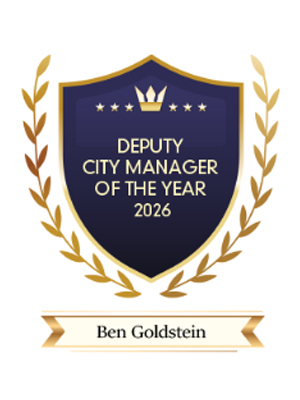
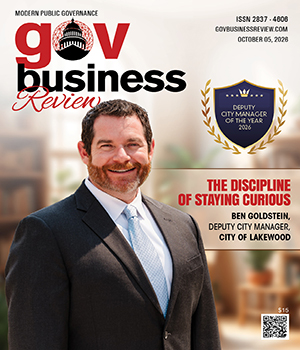
Ben Goldstein
The Discipline of Staying Curious
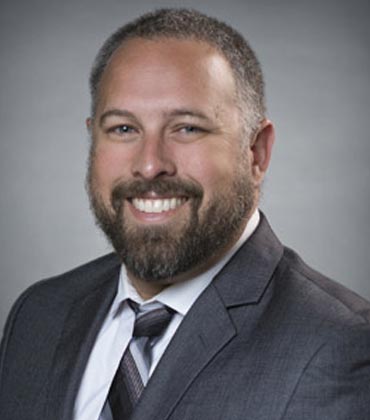
Ben Goldstein has spent over two decades working in nearly every aspect of local government, from financial management in Denver to policy work as Deputy City Manager in Lakewood since 2018. Lakewood itself, the fifth largest city in Colorado and a full 44 square miles, operates as a forward-looking municipality built around responsive public services, sustainable development and a genuine commitment to quality of life. Goldstein sits at the center of that operation, translating the council’s vision into the daily work of running a city. His range of experience and the steadiness he has brought to it have earned him recognition as Deputy City Manager of the Year 2026. Where Public Service Became a Calling Goldstein’s inspiration for public services began with two people who influenced him early in his career. An internship with the City of Boulder under City Manager Ron Secrist introduced him to city management as a career option that resonated with him. A second internship in the Fort Collins city manager’s office under City Manager Darin Atteberry cemented his career path. He credits both leaders directly, one for opening the door and the other for making sure he walked through it. What followed was a purposeful journey in local government. From finance and policy development to legislative affairs and city management itself, each role added a different vantage point on how a community actually gets served. Each one reinforced the same lesson: The best outcomes grow from pulling together different perspectives around a common purpose. Goldstein has come to see effective local government as a team effort at its core and leadership as helping those teams succeed together. Finding True North Through Deliberative Leadership The Deputy City Manager role sits at an intersection few outsiders appreciate. The role operates at the nexus of elected officials, department directors and the community itself, absorbing competing priorities from every direction. Gol
Government HR

City of Charleston
Leading Municipal Finance Beyond the Annual Budget
Andrew Jones, Director of Budget and Management, City of Charleston
Andrew Jones serves as Director of Budget & Management for the City of Charleston. Over nearly 13 years with the city, he has progressed from budget analyst to department leader.
Govt Security
Building Digital Trust in Local Government
Josh Erquiaga, MBA, CGCIO, Information Technology Manager, City of San Luis Obispo
Crisis Management
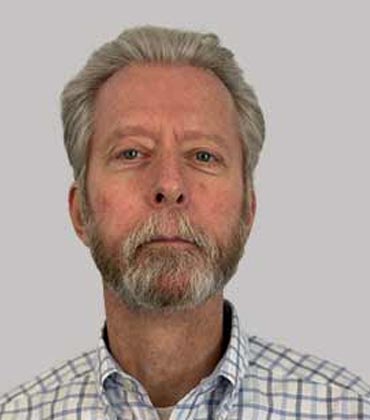
From Response to Resilience: Why Municipal Emergency Management Must Evolve Beyond the Incident
Thomas Luby, Emergency Manager - Mayor’s Office of Emergency Management and Resiliency, City of Buffalo, New York
Crisis Management

Why Emergency Preparedness Must Begin with Cross-Agency Collaboration
DeWayne Rose, NEMEA, Director of Emergency Management, City of West Memphis
Govt Consulting
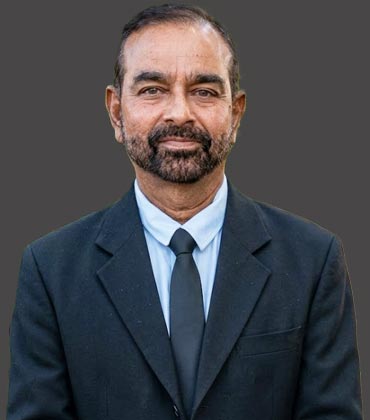
Developing People While Advancing Technology and Innovation
Rakesh Patel, Deputy CIO and Innovation Officer, Director of Technology, Pinellas County Government, Clerk of the Circuit Court & Comptroller
Govt Consulting

Modernizing Municipal Government: Aligning Technology, People and Process for Better Public Services
Scot Barker, Chief Innovation Officer, City of Burlington, Vermont

IN MY OPINION
Justice and Public Safety
Introducing the Life-Safety Systems Doctrine: When Expectations Exceed Capabilities
John M. Taylor. Ed.D(c). Ph.D., MPPA, MBA, NEMAA, Manager Division of Emergency Management and Safety Officer, Mason County WA

LAST WORD
Crisis Management
Leading Emergency Preparedness through Partnership
Ada McDaniel, Ed. D, Former Emergency Management Director, Muckleshoot Indian Tribe
IN FOCUS

Modernizing Government Supply Chains through Digital Innovation
Government supply chain services support improved procurement efficiency, reduced operational delays and stronger supply continuity.
Harnessing GIS: The Future of Public Transport Solutions
GIS technologies are helping public transport organizations improve planning, operations, asset management, and data-driven decision-making.
EDITORIAL
Public Leadership Built for the Long Term
Public-sector leadership is increasingly defined by how effectively municipalities connect community priorities, financial discipline, technology, infrastructure and people. This issue of Govt. Business Review explores leadership approaches that place trust, collaboration and long-term value at the center of public service.
Ben Goldstein, Deputy City Manager of the City of Lakewood is awarded Deputy City Manager of the Year 2026 for a management style that is based on experience in the local government sector of over two decades. His knowledge of finance, legislation, policymaking, and city management forms the basis of his realist theory of management that centers on cooperation and common objectives. At the City of Lakewood, Goldstein helps in the implementation of council resolutions through the use of strategic goals as a “true north” for conflicting priorities. He also champions long-term infrastructure investment, including Lakewood’s largest infrastructure project along the West Colfax Avenue corridor. His broader view is that residents experience government as one city rather than separate departments, making collaboration essential to addressing complex community needs.
The edition recognizes the Top 10 Budget Directors 2026, highlighting leaders who contribute to better financial planning in municipalities, connect the budget process with community objectives and help public agencies make disciplined decisions regarding their future. Such actions reflect a trend in the realm of public-sector finance that involves shifting from managing the budget process on an annual basis to sustainability, transparency and better resource allocation through sound decision-making.
Together, these perspectives point to a public sector where leadership is measured not only by immediate results but by stronger institutions, better-informed decisions and people prepared to carry the work forward. Explore the issue for practical perspectives on building that kind of public service.
