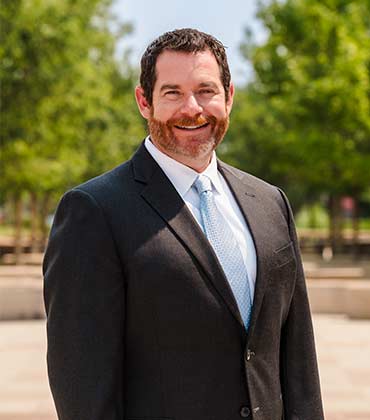
Ben Goldstein
Ben Goldstein has spent over two decades working in nearly every aspect of local government, from financial management in Denver to policy work as Deputy City Manager in Lakewood since 2018. Lakewood itself, the fifth largest city in Colorado and a full 44 square miles, operates as a forward-looking municipality built around responsive public services, sustainable development and a genuine commitment to quality of life. Goldstein sits at the center of that operation, translating the council’s vision into the daily work of running a city. His range of experience and the steadiness he has brought to it have earned him recognition as Deputy City Manager of the Year 2026.
Where Public Service Became a Calling
Goldstein’s inspiration for public services began with two people who influenced him early in his career. An internship with the City of Boulder under City Manager Ron Secrist introduced him to city management as a career option that resonated with him. A second internship in the Fort Collins city manager’s office under City Manager Darin Atteberry cemented his career path. He credits both leaders directly, one for opening the door and the other for making sure he walked through it.
What followed was a purposeful journey in local government. From finance and policy development to legislative affairs and city management itself, each role added a different vantage point on how a community actually gets served. Each one reinforced the same lesson: The best outcomes grow from pulling together different perspectives around a common purpose. Goldstein has come to see effective local government as a team effort at its core and leadership as helping those teams succeed together.
Finding True North Through Deliberative Leadership
The Deputy City Manager role sits at an intersection few outsiders appreciate. The role operates at the nexus of elected officials, department directors and the community itself, absorbing competing priorities from every direction. Goldstein calls it one of the hardest parts of the job. His answer is not to referee every dispute as it arises. It is to establish a “true north” in advance based on core values and goals that are built on a strategic planning process worked out directly with the elected body. As a result, when new priorities compete for attention and resources, everyone can point to what they already agreed matters most.
Maintaining trust starts with transparency well before a hard decision arrives, so that it is not the first time anyone is hearing about the issue from him.
The process starts with making sure people understand not only what the priorities are, but also why they matter. Goldstein’s role is to align departments around those shared goals, clear away barriers to collaboration and keep decisions moving in the direction the council has set. When priorities do collide, as they regularly do, he returns to the strategic goals already on the books and leans on the relationships he has built across the organization to find a path forward.
Communication and Trust as Core Infrastructure
Goldstein treats communication as a discipline, not a reaction. Decisions that affect residents directly, workforce reductions, service cuts and changes in revenue all can land hard on a community, particularly if residents don’t hear regularly from their local government. Maintaining communications with the community builds trust and it starts with transparency well before a hard decision arrives. That means when tough decisions need to be made, it is not the first time residents have heard from him. He believes in explaining the financial and resource realities plainly, walking through the rationale for decisions and helping people understand how a difficult choice supports the organization’s long-term sustainability. When it comes to communicating about fiscal responsibility, he sees it as never just talking about balancing a budget. It is about keeping the organization strong enough to keep delivering the services a community depends on. Communicating is never an afterthought for Goldstein. He sees it as the core to each phase of the decision-making process and to maintaining trust.
Investing in What Residents Never See
Long-term infrastructure competes for attention against immediate service delivery and Goldstein has learned to make the case about these competing needs in terms that residents actually feel and understand. Roads, water systems and stormwater infrastructure rarely draw attention when they are working. The moment they degrade, they become the loudest complaint in the room. Lakewood is currently delivering the largest infrastructure project in its history along the West Colfax Avenue corridor, combining stormwater improvements with traffic safety enhancements into a single corridor built to be safer, more resilient and better prepared for what comes next. Goldstein sees infrastructure as one of the most lasting investments a city can make and views his job as making sure those investments result in real, lasting value for the residents who will never see the pipe beneath the street.
One City, Not a Collection of Departments
Housing affordability, sustainability and digital access are reshaping what residents expect from city government and Goldstein believes those expectations don’t fit inside a traditional organizational chart. Someone experiencing homelessness does not care which department responds on a cold night. Residents do not experience government one office at a time. They experience one city. That belief has pushed Lakewood toward operating as a single team aligned around shared outcomes rather than a set of departments working in isolation, a shift he sees as necessary not only for today’s challenges but also for the ones the city has not yet encountered.
Letting Go of Having All the Answers
Ask Goldstein which assumption about leadership he would most like municipal administrators to abandon and he does not hesitate with his answer. It is letting go of the idea that effective leadership means having every answer. Today’s problems are too complex for any one person or any one department to solve alone. He points instead to building an environment where talented people can collaborate, challenge each other’s ideas and bring their own expertise to the table. Leadership, in his view, is built on trust, good questions and the willingness to empower any staff person to move the organization forward, not on being the smartest voice in the room.
Stay Curious
His advice to professionals early in their public administration careers comes down to a single idea. Stay curious. What he loves most about city management is that no day unfolds exactly as planned. A council priority shifts, an issue nobody anticipated appears and by the end of the week, he has become fully versed in something he knew nothing about a few days earlier. Some of his most valuable experiences came directly from responsibilities that are outside his core expertise, taken on because curiosity pulled him toward them rather than away.
That instinct, carried across finance, policy and now executive leadership, is the same one that has shaped Goldstein’s approach to running a city of Lakewood’s size and complexity. Progress rarely announces itself. It shows up quietly, in roads that hold up, in a trust that was built before it was needed and in a team willing to keep asking better questions.