
Thank you for Subscribing to Gov Business Review Weekly Brief

State of Vermont
Breanna Sheehan, Administrative Director for the Vermont Commission on Native American Affairs
Building Bridges Between Communities and Government
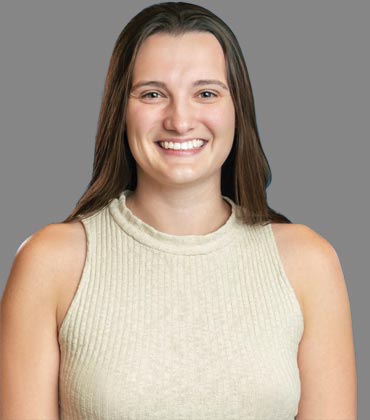
Breanna Sheehan
Breanna Sheehan currently serves as the administrative director for Vermont’s Commission on Native American Affairs. She received her BA in anthropology and native american studies from Dartmouth College and her MS in social policy and nonprofit leadership from the University of Pennsylvania. Prior to joining the Commission, she worked with The Bronx Defenders and the Volunteer Lawyers Project, providing technical assistance to legal aid organizations and supporting eviction prevention efforts, respectively. She is also an enrolled citizen of the Elnu Abenaki Tribe and works closely with her tribe on projects focused on cultural revitalization, cross-cultural engagement and land stewardship.
Leadership Rooted in Community My leadership journey is rooted in community. Growing up, I learned two fundamental realities: you take care of your people, and you do so by the means available to you. In a close-knit family and tribal community where no one had very much money, living these values often meant creative use of meager resources, balancing priorities and investing or sacrificing time to achieve your goals. As I grew up, those values did not change, but the resources available to me, particularly knowledge, did. Through my academic studies and early professional experiences, I came to see my role as that of a translator: someone who could feel and hear the needs of my community and translate those needs into something that could be understood by the governing systems responsible for addressing them, and vice versa. This understanding brought me to my current role with Vermont’s Commission on Native American Affairs, where I support the Commission in bridging the gap between Vermont’s Indigenous communities and the systems and institutions that govern them. While my “community” has grown and the resources have changed, my responsibility to serve my people and to do so by the means available to me has remained the same. Creating Space for Shared Leadership In my experience, effective leadership often looks less like making decisions yourself and more like getting the right people in the room and facilitating a decision-making process among them. Because of this, my interpersonal skills have arguably become more important to my leadership journey than my academic or professional expertise. I approach my professional relationships in much the same way I approach my personal ones—with authenticity, curiosity, humility and transparency. For successful collaboration to occur, all parties must be treated as meaningful collaborators. Especially when engaging across government agencies and communities, the usual hierarchies of decision-making need to be broken down so that everyone in the room feels they have a piece of the puzzle that can create a better path forward. To this end, as a leader, I rely heavily on my interpersonal values to facilitate this space: a level playing field where everyone is humanized and treated as a partner. Making Consultation Meaningful In my experience, the major barriers to meaningful collaboration and community input, especially with Indigenous communities, are time and capacity, both of which the public sector is chronically limited in. Because of this, culturally conscious collaboration can be challenging, but even small, intentional choices can go a long way.Effective leadership often looks less like making decisions yourself and more like getting the right people in the room.
The articles from these contributors are based on their personal expertise and viewpoints, and do not necessarily reflect the opinions of their employers or affiliated organizations.
