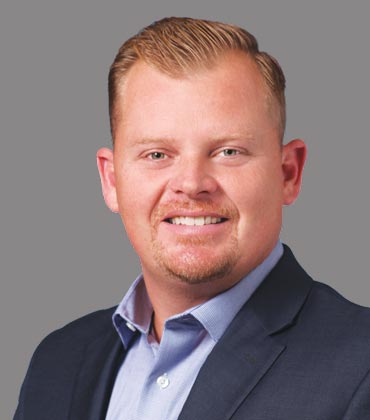
Cale Curtis
Having a background in accounting, finance, and public administration, Cale brings a practical, results-oriented approach to municipal leadership. He also serves as Executive Director of the Margate Community Redevelopment Agency, where he plays a leading role in advancing the city's redevelopment and economic development initiatives, including the transformational City Center project.
Transforming the City While Strengthening Its Foundations
Margate is at an interesting point in its history. We are a mature, largely built-out city, so for us the future is less about traditional growth and more about reinvestment and creating opportunities that have not existed here before.
The biggest example is our City Center project. The City and our Community Redevelopment Agency have spent years assembling approximately 50 acres in the heart of Margate. We now have an opportunity to turn that property into a true downtown and gathering place with residential, restaurants, retail, entertainment and public spaces.
At the same time, some of our most important investments are not nearly as visible. We are undertaking major improvements to our water and wastewater systems and continuing to invest in public safety, parks, roads and other infrastructure.
That combination is what makes this period so important for Margate. We are working on projects that can transform the city while also investing in the basic infrastructure and services that make a community work every day.
Planning beyond the Current Budget Cycle
Redevelopment naturally gets a lot of attention because people can see it. They can see a new building going up or imagine new restaurants and public spaces. Nobody gets quite as excited about replacing a water main, but that investment may be every bit as important to the city's future.
One of the challenges of being a city manager is that you have to think much further ahead than the current budget year. Some of the infrastructure decisions we make today will affect Margate 30 or 40 years from now.
Sometimes leadership means starting something that someone else will eventually finish.
I try to look at our decisions through that lens. What do our residents need from us today, but also, what should we be doing today so that someone is not sitting in this office 20 years from now wishing we had acted?
Sometimes that means making investments that aren't particularly exciting or visible. That is part of the job. Our responsibility is to leave the community in a better position than we found it.
Making Every Investment Count
My background is in accounting and finance, so I've probably always looked at the city budget a little differently. But one thing I've learned over the years is that financial stewardship is not simply about spending less money. It is about knowing where to spend it.
There will always be more things we would like to do than resources available to do them. The difficult part of leadership is establishing priorities and sometimes saying no to something worthwhile because there is a more important need.
I have also learned that being financially conservative does not mean being afraid to invest. There are times when not spending money today becomes much more expensive tomorrow. Infrastructure and deferred maintenance are probably the easiest examples of that.
I also place a lot of value on maintaining financial flexibility. Cities deal with hurricanes, economic cycles, legislative changes and unexpected costs. You cannot predict every challenge, but you can put the organization in a financial position to respond when those challenges occur.
For me, good financial stewardship comes down to a fairly simple question: Can we provide the level of service our residents expect today while making sure the next City Commission and the next City Manager have the financial ability to do the same thing?
Maintaining Service Excellence through Change
One thing I try to remind our team is that transformation does not excuse us from execution. We can be working on a major redevelopment project or planning an infrastructure investment that will affect Margate for decades, but the person calling us about a pothole or a problem in their neighborhood does not necessarily care about any of that. They just want their problem addressed.
Residents still expect the police to respond when they call, firefighters and paramedics to be there during emergency, clean water when they turn on the faucet, parks that are maintained and neighborhoods that look good. Those everyday interactions are how most people judge their local government.
My job is not to personally manage every one of those services. My job is to make sure we have good people leading them, that they have the resources they need, and that we have created a culture where people understand what is expected of them.
I am fortunate to have a very talented leadership team and employees who care about this community. I believe in giving them room to do their jobs, holding people accountable for results and stepping in when they need my help.
Advice for Emerging Public-Sector Leaders
Listen. Do not assume that because you work in local government every day, you always know what is most important to the people you serve.
One of the things I enjoy about local government is how close we are to the community. Residents will tell you what is working, and they will definitely tell you what is not. Both are valuable.
Think beyond your tenure. Some of the best decisions we make may not produce a ribbon cutting while we are still in the job. Infrastructure, redevelopment and organizational change take time. Sometimes leadership means starting something that someone else will eventually finish.
Surround yourself with really good people and let them do their jobs. I have learned that the higher you move in an organization, the less success is about what you can accomplish individually. It becomes much more about building a team that can accomplish things together.
Finally, remember who you work for. Titles come and go. At the end of the day, we are entrusted with public resources and given an opportunity to improve a community.