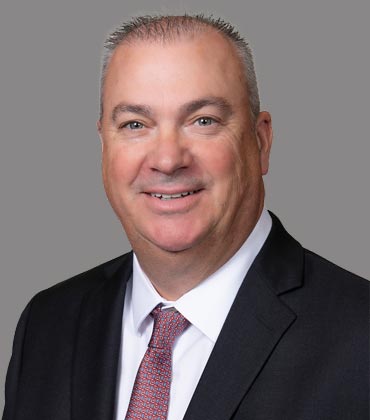
David Rowlands
David Rowlands brings extensive municipal leadership experience in finance, economic development and labor negotiations. A third-generation city manager, he has worked across several Ohio and California communities, guiding city operations and collaborating with elected officials, department leaders and employees to address local needs and improve public services.
Leading Through Listening
My journey to city leadership is a unique one.
I grew up observing the profession through my grandfather and father, both city managers. My grandfather worked in cities across the country before retiring in Huntington Beach, California. My father served as a county and city manager and retired in Chula Vista. I remember sitting at the table with my grandfather, listening to our conversations about what we called the family business.
I knew I wanted to become a city manager from those conversations. My career began in Mason, Ohio, followed by an assistant city manager role in Carrollton. I then served as deputy city manager in Novato, California, before becoming Clayton, Ohio’s first city manager, a role I held for 12 to 13 years. I later led the financially challenged city of Fillmore, California, before joining Santa Maria two years ago.
My leadership was also shaped by playing basketball and coaching high school girls. Coaching taught me empathy, how to support people’s success and build a quality team.
As city manager, I view myself as the CEO of a major corporation, with the City Council as the board and department directors leading their functions. Santa Maria is a full-service city, covering water, trash and transportation to parks, recreation and libraries. My responsibility is to align departments, communicate across the organization and make sure employees feel heard.
Technology must help us deliver better public services, but so must listening to residents.
I started hosting Friday coffee gatherings for staff. I bring donuts, visit different work locations and meet staff without an agenda. They ask about my family, education and life beyond City Hall. These conversations help them see me as a person, not just a city manager, and build trust during difficult times.
Rethinking Local Government
Cities face revenue challenges and struggle to provide affordable housing, especially along the Central Coast. We need to be more entrepreneurial by helping builders deliver needed housing while remaining financially viable. We should learn from other cities and countries, improve efficiency and rethink practices we've maintained for 20 or 25 years.
I encourage employees to experiment, learn from failure and try new approaches. We should use AI wherever possible, hire the best and brightest and give them the freedom to be creative. Giving talented people autonomy helps them take ownership and find better ways to serve residents.
Cities use newsletters, surveys, social media, text messages and community events to gather public input, but reaching everyone remains a challenge. Even our sales tax measure town halls have drawn only five or six people from a city of 125,000. Often, the same 10 to 15 active residents participate, leaving many voices unheard. We need to find better ways to engage residents.
Holding meetings at neighborhood community centers instead of City Hall brings local government closer to residents.
Using Technology to Improve Services
Technology must help us deliver better public services, but so must listening to residents.
Our transit system is doing a phenomenal job. We are one of only two cities in the country with an all-electric fleet, and we use data to understand ridership and identify efficient routes. Our service extends beyond Santa Maria to San Luis Obispo County, nearby communities and Vandenberg Space Force Base, while also supporting Guadalupe's transit system.
We are exploring drones as first responders, allowing officers to assess situations before arriving at a scene and improving their safety. We are also looking at artificial intelligence for traffic signals, potentially helping prevent collisions by holding a red light when a vehicle is speeding toward an intersection.
Investing in Santa Maria's Future
Measure C, our sales tax initiative, is a key priority. If it passes, it will support infrastructure improvements in parks, greater ADA accessibility at sports fields, expanded recreation programming and additional in-house street repairs. It could help us hire key staff and shorten major project reviews to six months to a year, allowing developers to move projects forward with greater predictability and fewer delays.
My leadership philosophy is to be genuine, transparent and empower talented people. I tell department directors that if I can do their jobs better, I do not need them. The best people make our city stronger.
Local government has changed dramatically, with residents expecting immediate responses. We must explain that some processes take time and cannot be bypassed. My advice to aspiring public sector leaders is to be vulnerable, ask questions, admit when you do not know something and seek advice from colleagues. Keep learning, build relationships and, above all, have fun.