

Thank you for Subscribing to Gov Business Review Weekly Brief

Town of Chapel Hill, NC
Joshua Mecimore, Assistant Chief of Police, Town of Chapel Hill
The Paradigm Shift: Redefining Wellness in Modern Law Enforcement
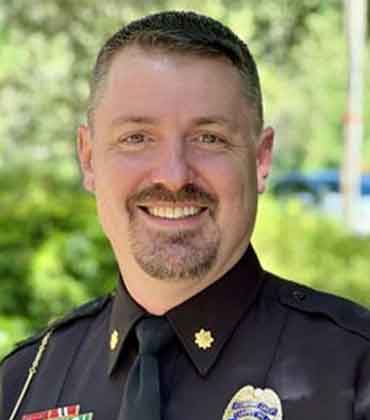
Joshua Mecimore
For generations, the unwritten rule of law enforcement was simple: do the job, absorb the trauma, and stuff the feelings down deep. It was a survival mechanism born of a different era. As a long-term strategy for our profession, it has cost us dearly in burnout, turnover, and tragedy.
Today, as Millennial and Generation Z make up a growing portion of our workforce, that mentality is no longer viable. Today’s officers expect and deserve a holistic approach to employee wellness. Leaders must recognize that caring for our people physically, mentally, and financially is not a soft HR initiative. It is the foundation of operational readiness and public safety. For police leaders, the challenge is not simply identifying wellness resources. It is building those resources into the organization in a way that officers trust, supervisors can support, and the budget can sustain. Physical Wellness: Beyond the Annual Run For too long, policing has treated physical fitness primarily as an academy graduation requirement or an annual box to check. We need to reframe physical health around career longevity and daily capability. The daily toll of a duty belt, constant micro-traumas, and adrenaline dumps can wear down bodies and disrupt sleep. Leaders must create an environment that prioritizes functional movement, core stability, and mobility. The goal is no longer meeting an arbitrary run time or passing an annual fitness test. It is about ensuring an officer remains healthy, injury-free, and able to safely perform their duties throughout a long career. Mental Wellness: Addressing Cumulative Trauma When discussing mental health in policing, leadership focus often jumps to major critical incidents. While debriefing high-profile calls is vital, that focus can miss one of the less visible contributors to officer burnout: cumulative micro-trauma. Decades ago, the concept of the hypervigilance biological rollercoaster was used to describe how the constant physiological high required on duty can lead to an automatic, paralyzing low at home. More recent work has expanded our understanding through what is increasingly referred to as Operator or Officer Syndrome. In policing, an officer’s nervous system stays keyed up, scanning for threats. While that state helps keep officers safe on duty, remaining in a cycle of heightened alertness takes a physical and neurological toll. Over time, that can lead to chronic sleep disruption, physical exhaustion, and emotional stress injuries.Caring for our people physically, mentally, and financially is the foundation of operational readiness and public safety.
The articles from these contributors are based on their personal expertise and viewpoints, and do not necessarily reflect the opinions of their employers or affiliated organizations.
