
Gov Business Review Magazine

A featured contribution from Leadership Perspectives: a curated forum reserved for leaders nominated by our subscribers and vetted by the Gov Business Review Advisory Board.

Kitsap County

Rafe Wysham, Director of Community Development

Leading Public Service through Continuous Improvement
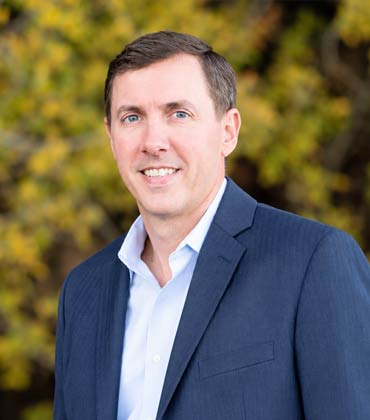
Rafe Wysham

Rafe Wysham

Rafe Wysham is Director of Community Development for Kitsap County. Drawing on more than two decades of naval leadership experience, he emphasizes informed decisions, employee participation, people development and continuous organizational improvement in public service.

From Naval Aviation to Public Service

I spent 26 and a half years as a naval officer, flying in F-14s as a radar intercept officer and in F-18s as a weapon systems officer. When I retired on January 1, 2025, I considered which parts of that career could translate beyond the military. Five days later, I began serving as Kitsap County’s Director of Community Development.

Flying in fighter aircraft was behind me, but two other motivations carried me forward—leading organizations in ways that positively influence people and improving the processes through which they work. The Navy moved me into a new role every two to three years. Each transition gave me a chance to identify shortcomings, introduce better processes and leave the organization stronger.

Frequent moves also exposed me to many leadership styles. I drew lessons from leaders who earned respect and important lessons from those who did not. Those observations became a toolkit that now guides how I lead in local government.

Making Decisions with Perspective

I began leading early. At 26, I was responsible for 60 people, many between 18 and 23, including some who were older and more experienced than me. At that stage, I tended to respond immediately to new information and sometimes overreacted to bad news.

Maturity taught me to underreact to new information. The trick is to pause, process the initial report and learn what caused the situation before deciding. That principle does not mean delaying when circumstances demand immediate action. It means gathering the best information available whenever time permits and recognizing what remains unknown.

You can’t improve your organization without allowing people at every level a meaningful opportunity to provide their input, ideas and suggestions.

Perspective also depends on the people around me. I want leaders who challenge my thinking behind closed doors, help me see decisions from other viewpoints and then support the direction when we leave the room. Their disagreement does not automatically change my decision, but it makes the reasoning stronger and the organization better.

Fostering Improvement at Every Level

I do not believe good should ever become good enough. Even when an organization appears to be operating at a high level, inefficiencies remain. Improvement cannot depend solely on people at the top.

Employees bring different experiences. You can’t improve your organization without allowing people at every level a meaningful opportunity to provide their input, ideas and suggestions.

That is why I invite ideas from across the department, including recent hires. Innovation team meetings create space to brainstorm, while anonymous suggestion boxes provide another way to contribute. Valuable ideas have emerged through both channels. The aim is to keep evolving rather than become comfortable with the status quo.

Being Present for People

Leadership also requires being present. When I joined Kitsap County, I spent 30 minutes individually with all 92 employees, which is 46 hours in total. I wanted to understand each person beyond a job title. My goal was to find out where they stood professionally, what challenged them and where they hoped to be in one or five years.

Those conversations helped bridge the distance between senior management and the wider department. They also gave me the insight to place employees in situations that support their development. That opportunity may exist within our organization or, at times, elsewhere. If someone leaves for growth we could not provide internally, I can still be pleased that we helped prepare them.

Growing Through Discomfort

My advice to aspiring leaders is to keep challenging yourself and deliberately enter situations that feel uncomfortable. Early in my career, I dreaded public speaking. So I repeatedly put myself in that position, which allowed me to overcome my discomfort until I began looking forward to it.

Choosing only the easy route leaves a leader unprepared when a genuinely difficult moment arrives. Experiences gained earlier, especially uncomfortable ones, become resources to draw upon when the circumstances are unfamiliar and the team needs direction. Leadership growth depends on seeking those experiences before they become unavoidable.

The articles from these contributors are based on their personal expertise and viewpoints, and do not necessarily reflect the opinions of their employers or affiliated organizations.