
Thank you for Subscribing to Gov Business Review Weekly Brief


Government and defense procurement demands more than access to products. It requires technical precision, dependable suppliers, rigorous documentation, and accountability throughout delivery.
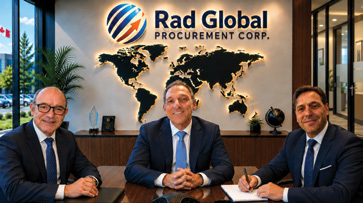 RAD Global Procurement, a Canadian-based sourcing and supply chain partner with more than three decades of experience, helps government, defense, industrial, and commercial clients secure specialized equipment, spare parts, and hard-to-find components.
Under the leadership of Managing Directors Edouard, Charles and Richard Radovic, the company connects international supply capabilities with Canadian procurement requirements, simplifying complex transactions from initial assessment to after-sales support.
Disciplined Approach to Procurement
RAD Global Procurement begins by understanding the operational and contractual requirements behind each request. Rather than relying solely on product descriptions, the team examines technical specifications, compliance obligations, commercial considerations, and delivery expectations. It then identifies qualified suppliers, evaluates alternatives, coordinates documentation and logistics, and establishes a clear path to fulfillment.
This approach gives clients a single point of accountability instead of requiring them to coordinate multiple vendors across time zones, manage administrative processes, and resolve communication gaps independently. By integrating these responsibilities, RAD Global Procurement helps customers make informed decisions while maintaining visibility throughout the procurement process.
Expertise across Diverse Industries
Serving different industries requires flexibility without sacrificing consistency. RAD Global Procurement applies a disciplined sourcing process while recognizing that aerospace, agriculture, laboratory equipment, and other specialized sectors have distinct technical and operational demands. Close collaboration with customers and qualified manufacturers helps the company assess applicable specifications, identify product-specific risks, and develop appropriate supply plans.
Its international sourcing network also creates opportunities for Canadian organizations seeking specialized products and for capable international manufacturers pursuing Canadian markets. In particular, the company helps U.S. manufacturers navigate Canadian government and defense opportunities, connecting their capabilities with relevant customer requirements.
Reliability beyond the Purchase Price
Long lead times, scarce components, changing costs, fragmented supplier networks, and demanding documentation can complicate procurement.
RAD Global Procurement addresses these challenges by broadening sourcing options, validating alternatives, identifying risks early, and establishing realistic delivery commitments. The company recognizes that an attractive price offers little value when a product arrives late or fails to meet contractual specifications.
-
Our objective is simple: make difficult procurement manageable, connect the right supplier to the right requirement, and deliver with the documentation reliability that government and defense customers expect.
Supplier selection begins with due diligence. Technical capability, quality practices, industry experience, references, responsiveness, financial and operational reliability, and delivery performance all inform the evaluation. Depending on the requirement, the company may seek samples, certifications, inspections, or testing. These controls help ensure that cost advantages do not come at the expense of compliance or product reliability.
Government and defense contracts introduce further obligations, which may include traceability, controlled documentation, security requirements, export controls, packaging standards, inspection procedures, and formal acceptance criteria. RAD Global Procurement identifies applicable requirements and communicates them to the relevant suppliers before fulfillment.
Strengthening Quality and Operational Visibility
RAD Global Procurement is implementing an ISO 9001:2015 quality management system to formalize and strengthen its processes. The initiative emphasizes documentation control, traceability, risk-based thinking, corrective action, and continuous improvement, with the goal of making procurement more predictable and records more consistent.
Technology complements this effort. The company is advancing AI-enabled tools and workflow automation to improve data accuracy, responsiveness, document management, and visibility across procurement and contract management. Human review and management accountability remain central, particularly when handling sensitive information or complex technical and contractual decisions.
Accountable Leadership, Global Reach
Radovic describes the company’s defining strength as a combination of experience, flexibility, and direct executive involvement. “Our objective is simple: make difficult procurement manageable, connect the right supplier to the right requirement, and deliver with the documentation reliability that government and defense customers expect.”
Looking ahead, RAD Global Procurement aims to mature its quality management system, expand responsible technology use, strengthen supplier relationships, and deepen partnerships with international manufacturers.
Named a Top Government Supply Chain Services 2026, the company continues to build on its Canadian roots while helping domestic clients access specialized global products and international suppliers navigate Canadian procurement demands.
What Government Buyers Should Verify Before Sourcing Globally
A government buyer may find a supplier offering the required equipment at an attractive price, only to discover that its documentation does not satisfy the contract or its delivery schedule misses a fixed acceptance date. Specialized spare parts create further uncertainty when original components are discontinued or available only through international manufacturers. Comparing government supply chain services therefore requires looking beyond sourcing reach to how providers verify requirements and retain responsibility through delivery.
Technical specifications can leave little room for substitution. Equipment ordered for a defense facility may have to meet precisely defined performance standards, while replacement components must work within existing machinery. Suppliers offering nominally equivalent products may differ in certification records or manufacturing methods. Procurement teams should establish how a sourcing partner checks proposed alternatives against the actual contract rather than relying on catalog descriptions. Where testing or inspection is required, the process should be agreed upon before an order is placed. Otherwise, an apparent saving can disappear when goods fail acceptance.
International sourcing adds responsibilities that domestic purchasing teams may not routinely manage. Export restrictions can affect availability, while customs documentation and packaging requirements influence whether shipments move on schedule. The supplier must understand which obligations apply to its work, particularly when government contracts impose conditions extending beyond the purchase order. Buyers should examine how a procurement intermediary passes these requirements to manufacturers and verifies their acknowledgment. Clear responsibility for resolving missing documents can prevent delays at shipping or receiving.
“RAD Global Procurement reviews technical specifications and contract obligations before identifying qualified manufacturers, then coordinates the documentation and delivery requirements associated with each order.”
An unfamiliar manufacturer may offer a shorter quotation turnaround without having demonstrated capacity to fulfill the order. Supplier qualification should examine relevant production experience and financial and operational reliability, supported by evidence when the purchase involves specialized equipment. Reference checks and documentation reviews are useful only when findings influence the sourcing decision. Long lead times require particular care. An acceptable quoted delivery date should be supported by a realistic production commitment, especially for scarce parts whose availability can change between inquiry and purchase.
Contract administration becomes difficult when purchasing personnel must chase several suppliers across time zones. A sourcing partner can simplify communication, but buyers should determine whether it manages exceptions or merely forwards updates. Delivery milestones should be tracked against the agreed terms, with escalation procedures for substitutions and late shipments. Post-delivery questions also require an accountable contact when goods arrive damaged or acceptance documentation is incomplete. Procurement executives should distinguish a provider's geographic network from its ability to finish individual orders properly.
RAD Global Procurement reviews technical specifications and contract obligations before identifying qualified manufacturers, then coordinates the documentation and delivery requirements associated with each order. The Canadian sourcing company supports government and defense purchasing of specialized equipment and hard-to-find parts, including procurement involving international suppliers. Its supplier reviews address technical capability and delivery reliability, with supporting inspections or testing considered where appropriate. Direct senior management involvement provides continuity from requirement clarification through after-sales support. The company is implementing an ISO 9001:2015 quality management system, rather than claiming completed certification. Canadian government buyers managing specialized imports and international manufacturers supplying Canadian public-sector contracts are particularly relevant clients.
...Read more
Government Supply Chain Services Info
Q1
What Do Government Supply Chain Services Include?
Government Supply Chain Services cover the sourcing, purchase, documentation and delivery of products required by public agencies. These services can involve specialized equipment, replacement parts and components that must meet precise technical and contractual requirements. Providers coordinate with qualified suppliers, review product specifications and manage logistics to support timely delivery. They also help address challenges such as limited product availability, long lead times and compliance obligations that can complicate government procurement.
Q2
How Does RAD Global Procurement Support Government Purchasing?
RAD Global Procurement helps government and defense organizations source specialized equipment, spare parts and hard-to-find components through its international supplier network. Based in Canada, the company has more than three decades of experience in procurement and supply chain operations. Its process includes reviewing technical specifications, identifying qualified manufacturers, coordinating documentation and managing logistics. These Government Supply Chain Services give customers a single point of accountability from initial requirements assessment through delivery and after-sales support.
Q3
Why Is Supplier Qualification Important in Public Procurement?
Supplier qualification helps organizations determine whether a manufacturer can meet technical, contractual and delivery requirements. Government Supply Chain Services should include checks on supplier capabilities, quality practices, relevant experience, responsiveness and operational reliability. Depending on the purchase, buyers may also require references, certifications, product samples, inspections or testing. These checks help reduce the risk of receiving unsuitable products, missing delivery deadlines or facing problems during formal acceptance. A competitive price alone does not establish supplier suitability.
Q4
How Can Global Sourcing Address Government Procurement Challenges?
International sourcing can expand access to specialized equipment and components that may be difficult to obtain through domestic suppliers. However, it also introduces challenges involving export controls, customs documentation, shipping schedules and product compliance. Government Supply Chain Services help coordinate these requirements across suppliers and locations. Buyers should assess how providers verify alternatives against contractual specifications, communicate requirements to manufacturers and manage delivery commitments. Clear documentation and early risk assessment can help prevent delays and reduce unexpected costs.
Q5
How Does RAD Global Procurement Manage Quality and Documentation?
RAD Global Procurement reviews technical requirements, compliance obligations and delivery expectations before coordinating with suppliers. The company is implementing an ISO 9001:2015 quality management system to strengthen documentation control, traceability, risk management and corrective action. It is also advancing AI-enabled tools and workflow automation to improve data accuracy, document management and procurement visibility. These Government Supply Chain Services combine process improvements with human review and management accountability, particularly when technical decisions or sensitive information require careful oversight.
Q6
What Should Buyers Evaluate When Comparing Procurement Providers?
Buyers should examine whether Government Supply Chain Services cover the full purchasing process, from requirement assessment to delivery and after-sales support. Important factors include technical knowledge, supplier verification, documentation accuracy, realistic lead times and clear responsibility for resolving problems. Organizations should also ask how providers handle product substitutions, inspections and contractual acceptance requirements. Reviewing these areas helps buyers compare providers on their ability to deliver suitable products reliably rather than relying on quoted prices or sourcing reach alone.
Company : RAD Global Procurement
ManagementCharles Radovic, Edouard Radovic and Richard Radovic, Managing Directors, RAD Global Procurement